
The two approaches
A range combines burners and oven in one appliance, usually in the main counter run, with a hood above. Stacked wall ovens put one or two ovens (or an oven and a microwave or steam oven) in a tall cabinet at a comfortable height, and the burners go elsewhere as a separate cooktop, often in an island.
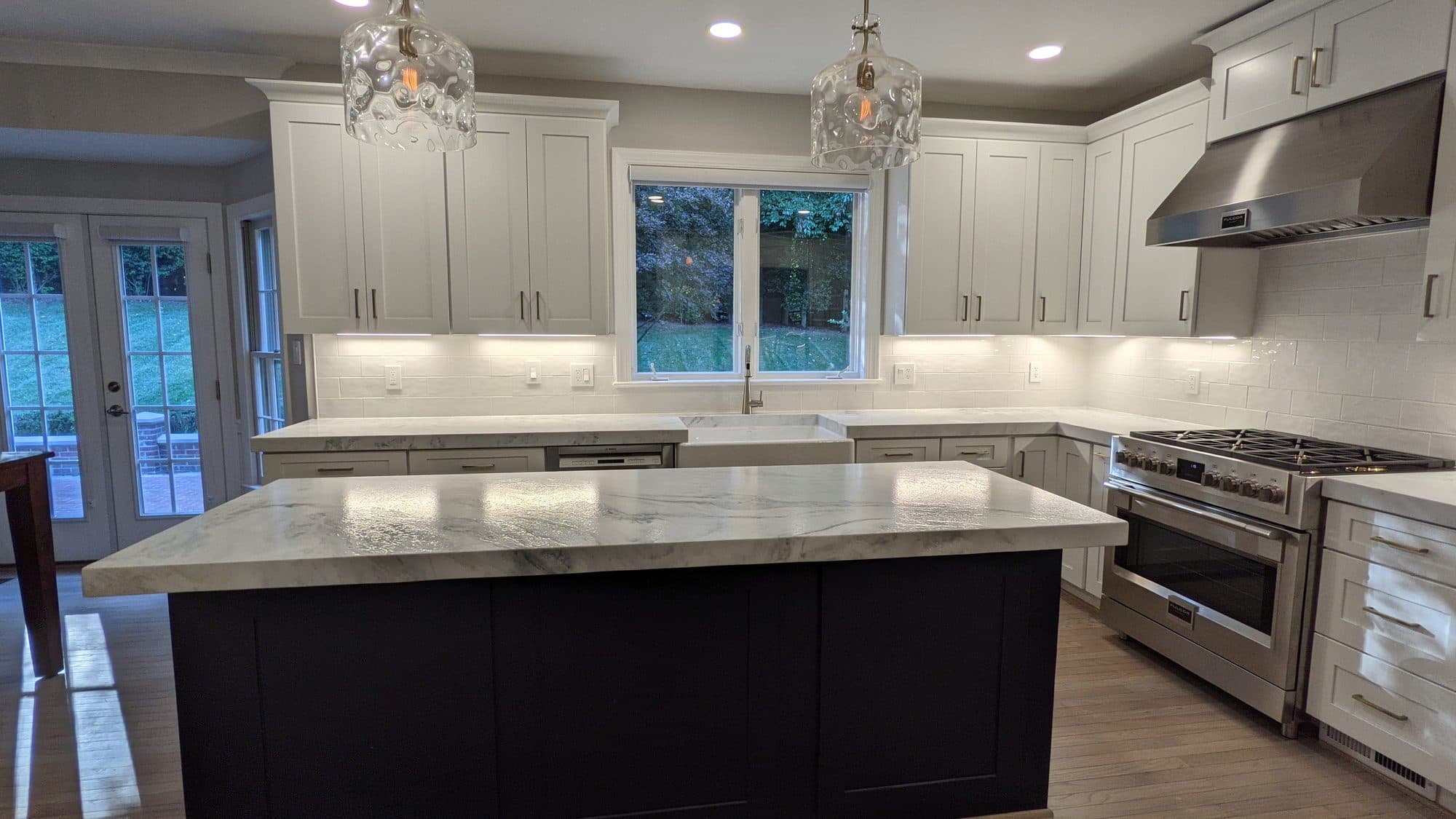
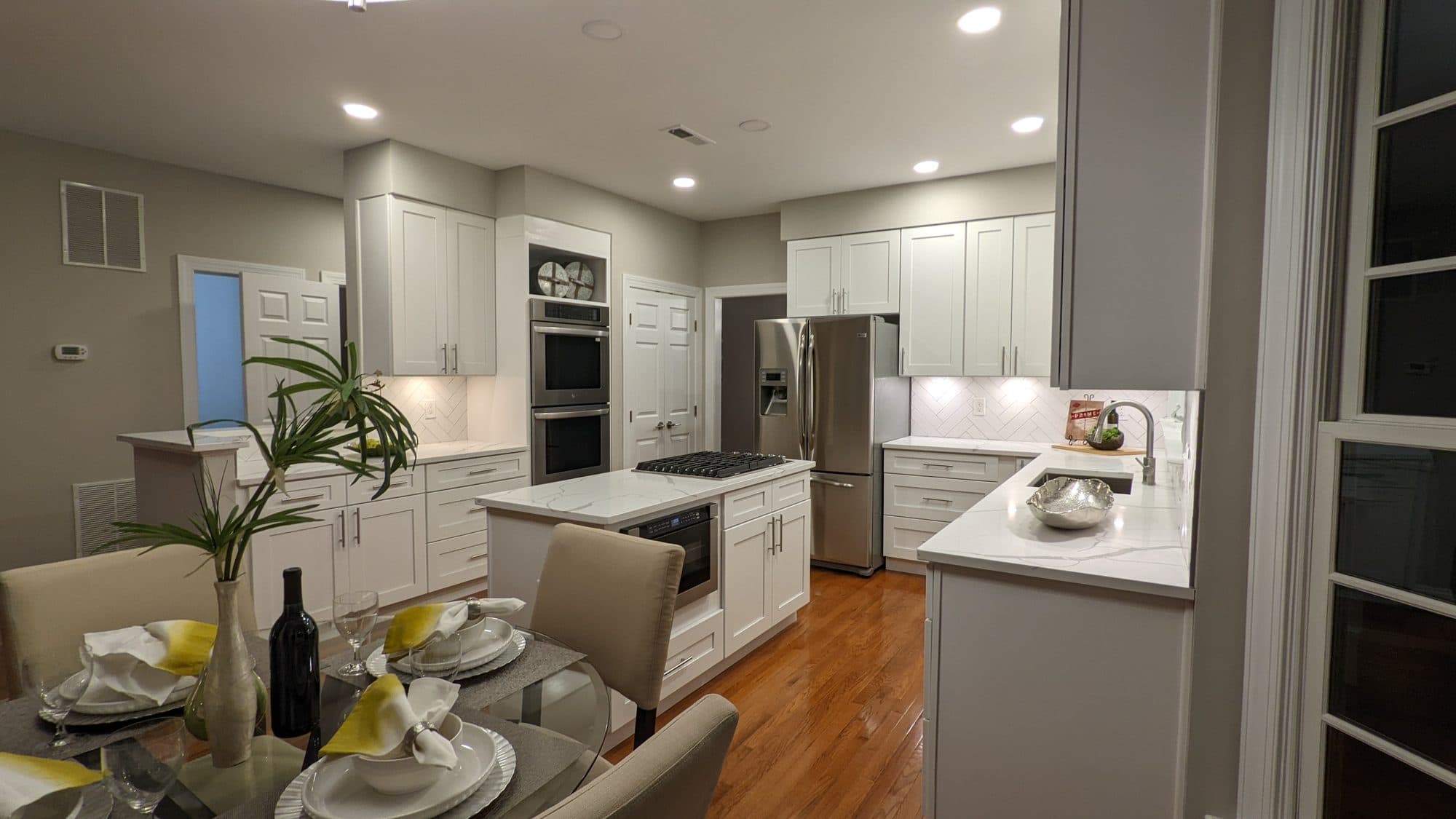
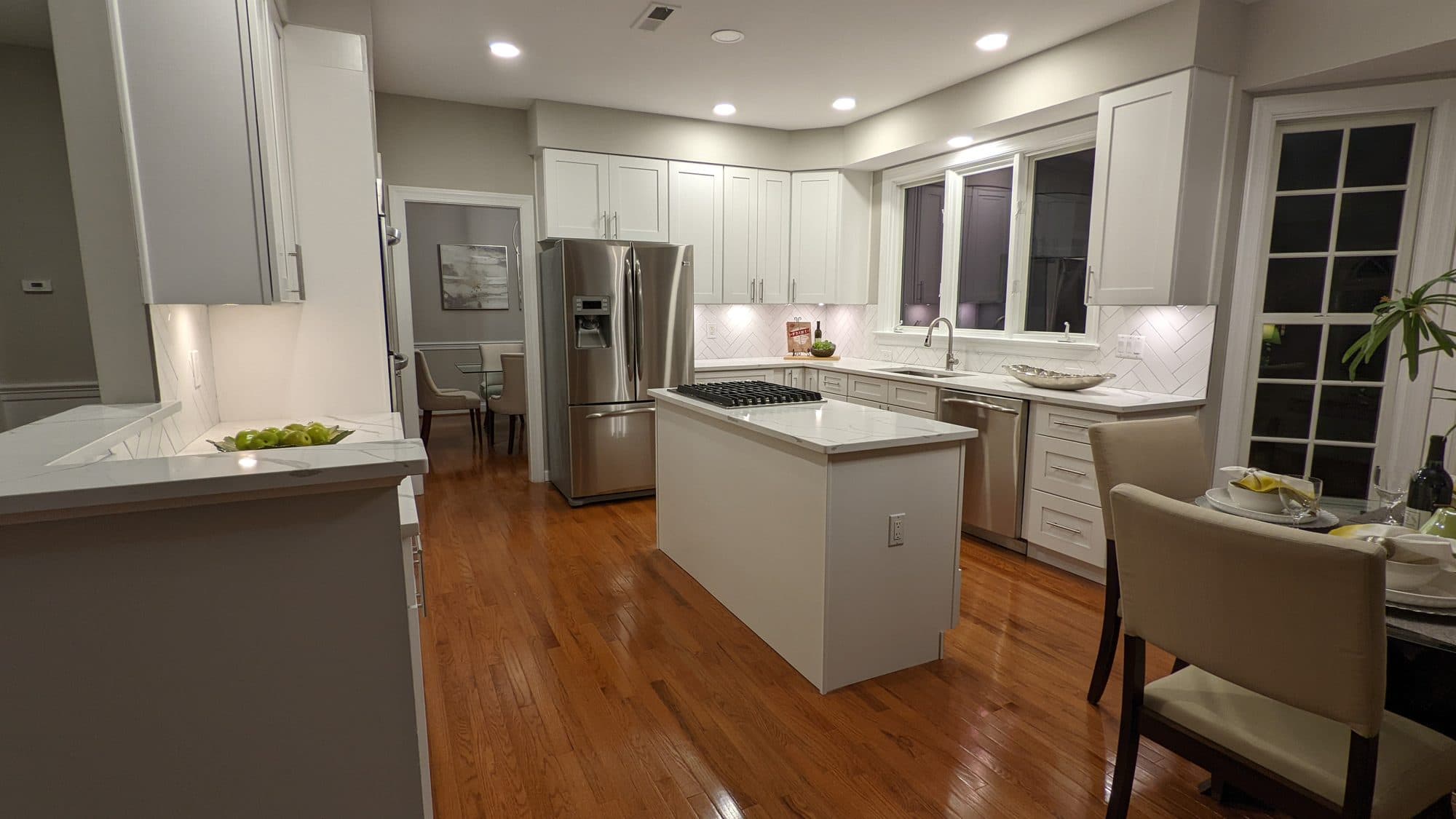
Above, the second Reston kitchen centers a professional-style gas range across from a navy island. The third Reston kitchen stacks its wall ovens in a tall cabinet and puts a gas cooktop in the island, with a herringbone backsplash behind.
When a range makes sense
- The kitchen is narrow or small, and a tall oven cabinet would take counter space you need
- You want a single focal point, often with a statement hood
- Your gas or electrical service is already where the range sits
- Budget: one appliance and one hookup usually cost less than two
When wall ovens make sense
- You bake often and want two ovens, or want them at a height that saves bending
- You want the cooktop in an island facing the room
- You have a stretch of wall for a tall cabinet, ideally near the end of a run
- Several people cook at once and you want the oven traffic away from the burners
How you cook should decide it
The right choice follows your habits more than trends. If you cook on the stovetop most nights and bake occasionally, a single range with a good hood is efficient and puts everything in one place. If you bake often, roast large meals, or cook with someone else, separating ovens from burners lets two people work without colliding, and putting ovens at chest height means lifting a heavy dish without bending to the floor. Think about holidays too: a second oven matters most on the few days a year everything needs to be hot at once.
Consider the cooktop's position as well. An island cooktop faces the room, which is sociable, but spatters land on the island and the hood hangs in the middle of the view. A range against a wall keeps mess contained and puts the hood on the wall. In the third Reston kitchen, the herringbone backsplash sits behind the work areas while the island cooktop faces into the room.
What changes behind the walls
Splitting a range into wall ovens and a cooktop means two connections instead of one. Wall ovens are typically electric and usually need their own circuit. A gas cooktop needs a gas line to its location, and an island cooktop needs that line run under the floor. Every cooktop needs ventilation: an island hood, a downdraft, or a ceiling-mounted system, each with its own duct route. Fairfax County's permit guidance lists new or relocated gas fixtures, ovens and range hoods among work that needs a permit, and its list includes direct replacement of household appliances such as stoves and ovens; confirm with the county what your specific swap requires.
Reston-specific considerations
Venting is where Reston homes differ. In a detached house, a new hood duct may exit through an exterior wall, which changes the outside of the house; ask Reston Association's Covenants staff whether a new vent cap needs review. In a townhouse, an island hood duct may have to run between floor joists toward an exterior wall, which limits where the island cooktop can go. In a condominium, venting typically has to use existing paths, and your association likely has rules about gas work; check with it first. Confirm your home has gas service before choosing a gas appliance.
Cost
Moving from a range to wall ovens and a cooktop adds cabinetry, electrical, gas and ventilation work. That generally places a project in the mid-range ($35,000–$60,000) or high-end ($60,000–$120,000+) tiers of Kitchen Kings' published Northern Virginia reference ranges, and the electrical work alone falls under the $2,000–$8,000 kitchen electrical range. These are reference ranges, not quotes.
Do wall ovens take up more space than a range?▸
They use wall space in a tall cabinet instead of counter space under the burners. In a small kitchen that can cost counter or storage; in a larger one it frees the cooking area.
Can I put a gas cooktop in my island?▸
Often, if a gas line and ventilation can reach it. We assess both on site. That work needs Fairfax County permits.
Does swapping a range for a new one need a permit?▸
Fairfax County's permit page lists direct replacement of household appliances, including stoves and ovens, among items that need a permit. Confirm with the county for your situation.