
What a waterfall edge is
On a standard island, the countertop sits on top of the cabinets and overhangs slightly. On a waterfall island, the slab continues down one or both ends of the island to the floor, with the top and the side pieces mitered so the edge looks like a single fold. The sides replace the cabinet end panels. The result is clean and architectural, and it makes the island the focal point of the room.
Two Reston examples
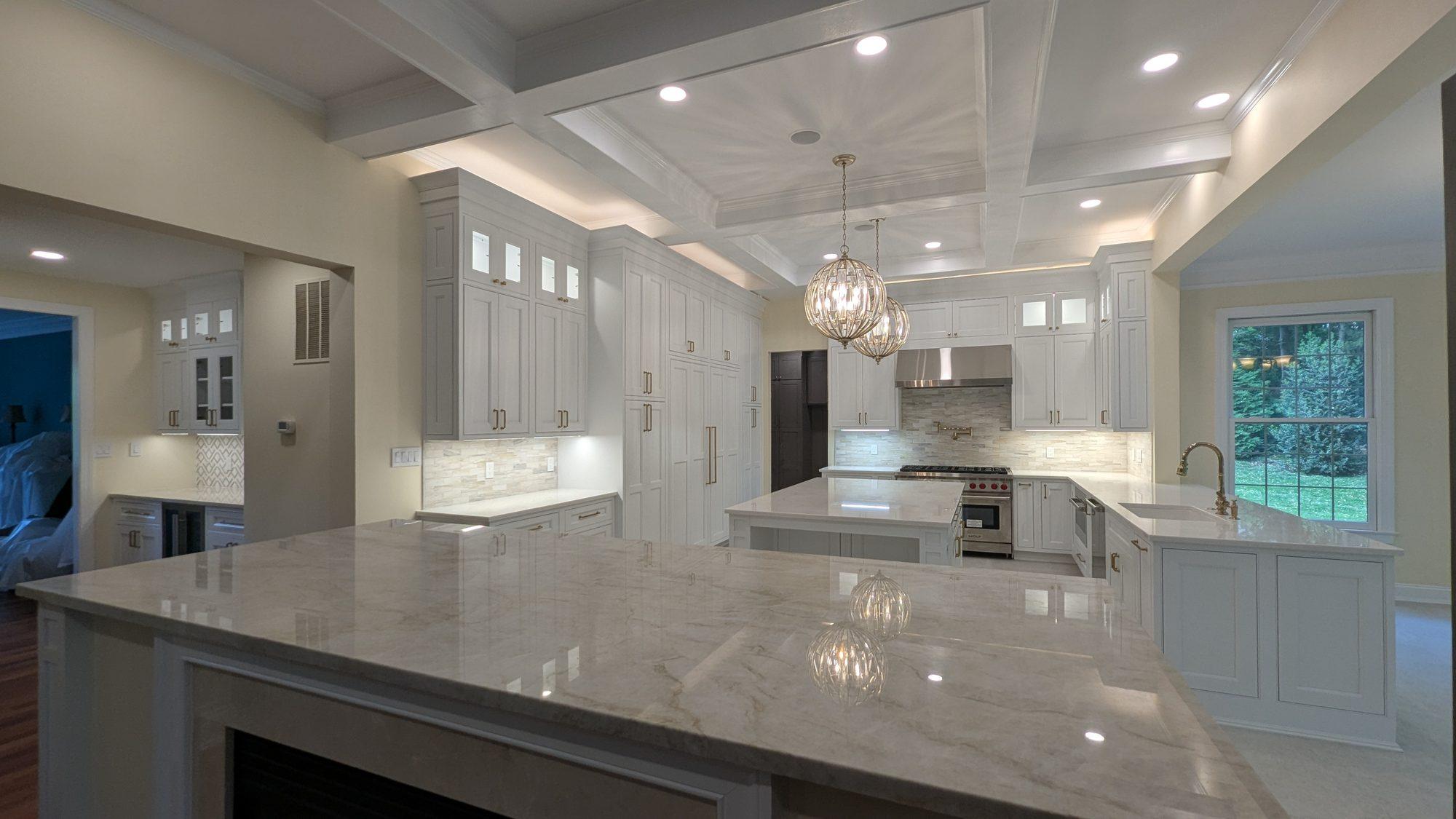
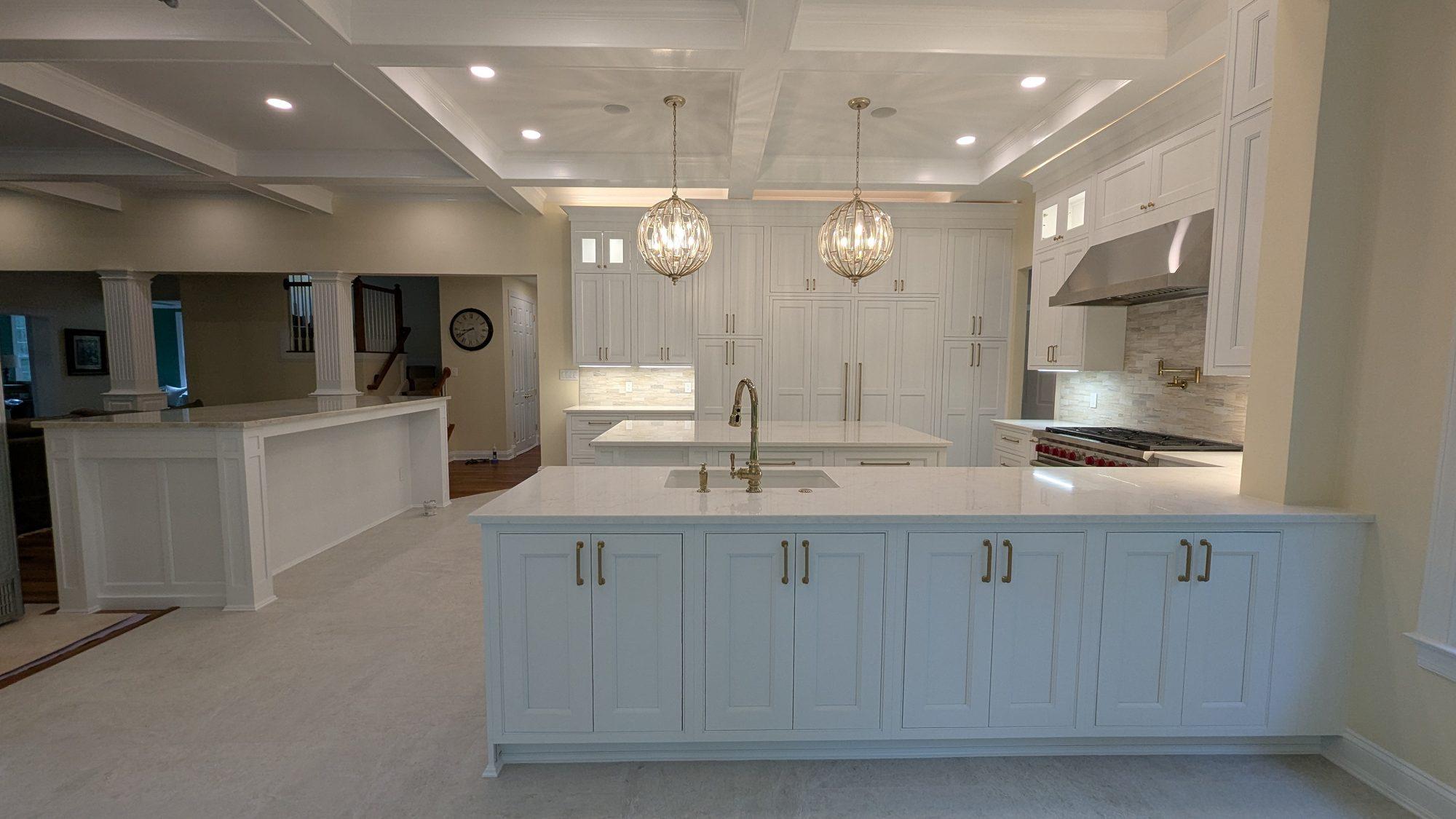
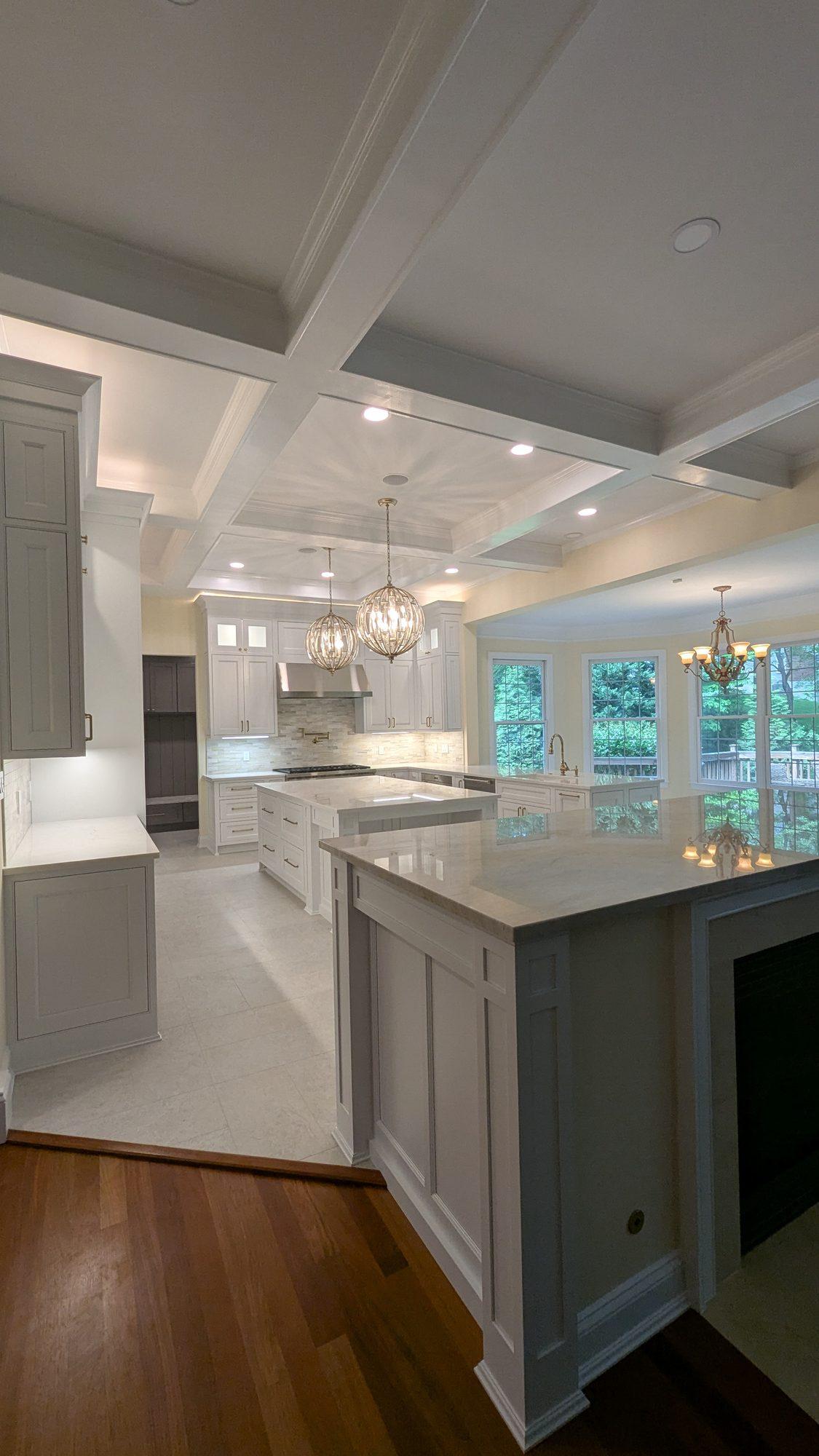
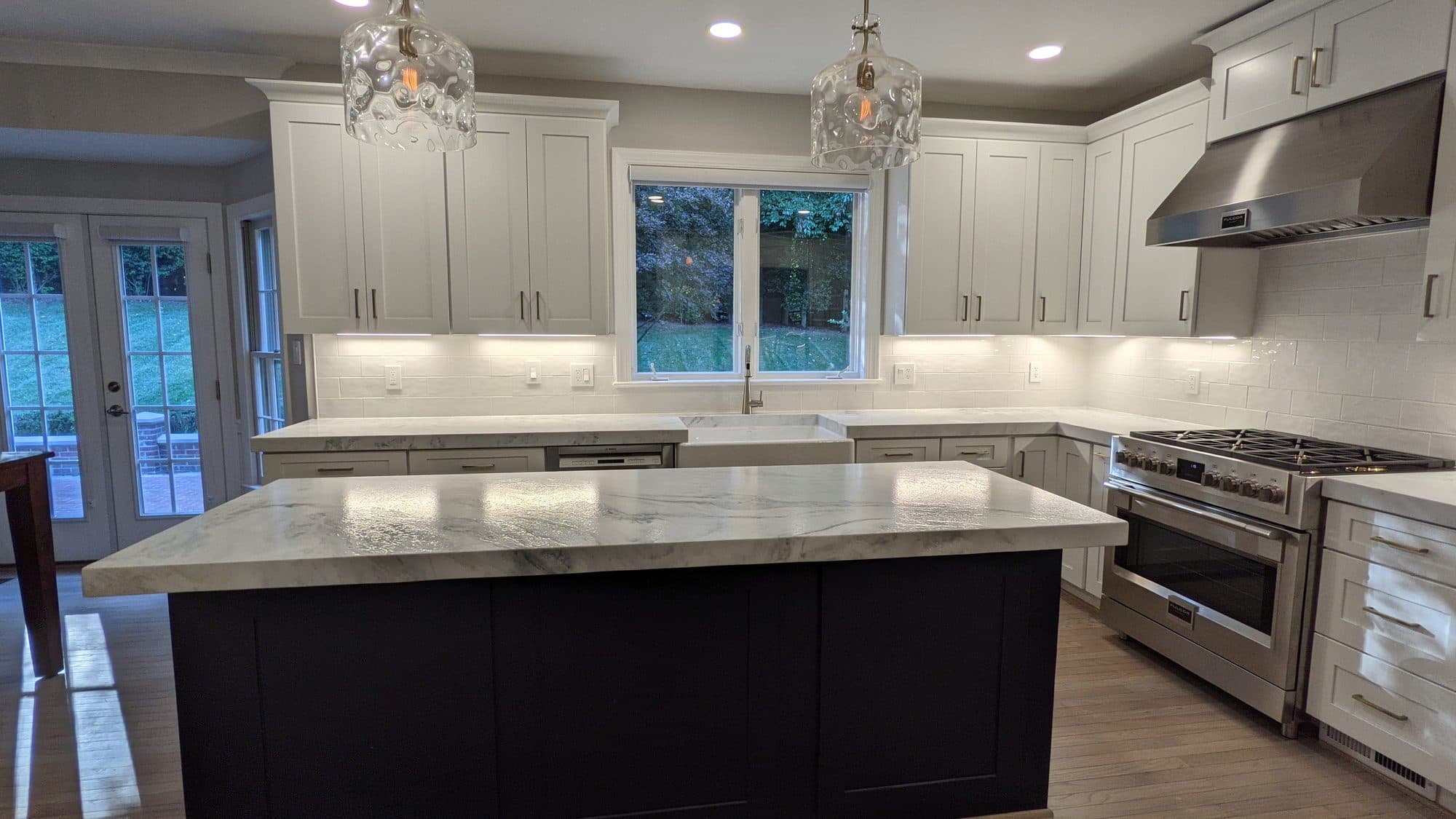
In our first Reston kitchen, a large waterfall-edge island with a marble countertop and brass pulls anchors the room under a coffered ceiling, with a breakfast nook connected to it. In our second, a navy island with a waterfall marble countertop holds a farmhouse sink. The two show how differently the same edge can work: one is the centerpiece of a light, formal kitchen; the other contrasts a dark painted island against stone.
Slab selection matters more
Because the stone turns a corner, its pattern has to make sense across the miter. With veined stone or veined quartz, you want the veining to appear to continue down the side rather than stop abruptly. That means choosing a slab, or slabs, large enough to cut the top and the sides from the same area, and laying out the cuts before fabrication. A waterfall island usually uses noticeably more material than the same island with a standard overhang.
Quartz with a consistent pattern is easier to match. Natural stone gives more dramatic results but needs more care in layout. Kitchen Kings uses MSI for quartz and also works with granite and other surfaces.
Function questions to settle first
- Seating: which side, how many stools, and how deep the overhang needs to be for knees
- Whether the island holds a sink, a cooktop, or neither; a sink brings plumbing and a dishwasher position
- Outlets: code-compliant island outlets need a place to go, and a waterfall side removes one option
- Walkway clearance on all sides, including where appliance doors open into the aisle
- Protecting the stone at floor level from mops, vacuums and chair legs
Pairing the island with the rest of the room
A waterfall island is the loudest surface in the kitchen, so the perimeter usually steps back. In our first Reston kitchen, shaker cabinetry and a stone backsplash around the room let the island's marble top and brass hardware take the lead, with crystal orb pendants overhead. In the second, the contrast comes from color: a navy island against white pantry cabinetry and stainless appliances. Either approach works; what rarely works is a waterfall island competing with an equally busy backsplash and a heavily patterned perimeter counter.
Decide early whether the perimeter counters match the island. Matching gives a unified look but means more of the same slab; a different, quieter perimeter surface can save material and let the island stand out. Hardware deserves the same attention, since the island's drawers are visible from the whole room.
One edge or two?
Some islands waterfall on both ends; others waterfall on one end and finish the other with a cabinet end panel or a seating overhang. A single waterfall uses less stone and can leave room for stools at the open end. A double waterfall looks the most like a single block and suits islands that stand alone in the middle of the room.
Waterfall islands in Reston homes
A waterfall island is a large object. It suits kitchens with room around the island, which in Reston usually means a detached house or a kitchen that has been opened to an adjoining room. In a narrow townhouse kitchen, a waterfall edge on a peninsula can deliver a similar look with less floor space. In a condo, measure the elevator and hallways before choosing slab size.
Permits
The countertop itself does not need a permit under Fairfax County's guidance; kitchen countertops are on the county's no-permit list. A sink, cooktop or new outlets in the island bring plumbing, gas or electrical permits with them.
Cost
Kitchen Kings' published Northern Virginia reference ranges are $5,000–$15,000 for kitchen islands and $3,000–$12,000 for countertops. A waterfall edge pushes material and fabrication toward the higher end of countertop work, and an island with plumbing or a cooktop adds trade work. These are reference ranges, not quotes.
Are waterfall islands practical?▸
Yes, if you plan the seating, outlets and walkway space. The stone sides are durable, but the bottom edge should be protected from cleaning equipment and chair legs.
Can a waterfall island have a sink?▸
Yes. One of our Reston kitchens has a farmhouse sink in a navy waterfall island.
Quartz or natural stone for a waterfall edge?▸
Quartz is easier to pattern-match across the miter. Natural stone can be more dramatic but needs careful slab layout.